-
Play-Fighting Bengal Tigers
Photograph by Michael Nichols
Born in captivity, these two Bengal tiger youngsters will never be fit for release into the wild. Tiger cubs, like all young animals, enjoy play-fighting.
Big Cats Initiative
National Geographic is working to avert the extinction of lions, tigers, and other big cats with the Big Cats Initiative, a comprehensive program that supports innovative projects. Learn how you can help save these animals.
-
Bengal Tiger and Cub
Photograph by Michael Nichols
A mother Bengal tiger and her cub rest in the tall grass of a meadow. Tiger cubs remain with their mothers for two to three years before dispersing to find their own territory.
Big Cats Initiative
National Geographic is working to avert the extinction of lions, tigers, and other big cats with the Big Cats Initiative, a comprehensive program that supports innovative projects. Learn how you can help save these animals.
-
Siberian Tiger Grooming
Photograph by Joel Sartore
Many conservation programs have been established to save the critically endangered Siberian tiger, whose numbers have dwindled to mere hundreds in the wild.
Big Cats Initiative
National Geographic is working to avert the extinction of lions, tigers, and other big cats with the Big Cats Initiative, a comprehensive program that supports innovative projects. Learn how you can help save these animals.
-
Siberian Tigers
Photograph by Michael Nichols
Of the three remaining species of tigers, Siberian tigers are the largest. While there are only 400 to 500 left in the wild, the population is considered stable, and conservation programs are introducing captive-born tigers to the wild.
Big Cats Initiative
National Geographic is working to avert the extinction of lions, tigers, and other big cats with the Big Cats Initiative, a comprehensive program that supports innovative projects. Learn how you can help save these animals.
-
Male Bengal Tiger
Photograph by Michael Nichols
Unlike lions, tigers live solitary lives and mark their territories to keep others away.
Big Cats Initiative
National Geographic is working to avert the extinction of lions, tigers, and other big cats with the Big Cats Initiative, a comprehensive program that supports innovative projects. Learn how you can help save these animals.
-
Bengal Tiger
Photograph by Michael Nichols
Since tigers hunt mostly at dusk and dawn their stripes help them hide in the shadows of tall grasses.
Big Cats Initiative
National Geographic is working to avert the extinction of lions, tigers, and other big cats with the Big Cats Initiative, a comprehensive program that supports innovative projects. Learn how you can help save these animals.
-
Female Bengal Tiger
Photograph by Michael Nichols
Tigers are primarily nocturnal hunters and spend the days lounging in the grass or well camouflaged in the forest.
Big Cats Initiative
National Geographic is working to avert the extinction of lions, tigers, and other big cats with the Big Cats Initiative, a comprehensive program that supports innovative projects. Learn how you can help save these animals.
-
Bengal Tiger
Photograph by Michael Nichols
Tigers hunt by creeping stealthily and lying in wait. When prey is close enough, they attack with a fatal pounce.
Big Cats Initiative
National Geographic is working to avert the extinction of lions, tigers, and other big cats with the Big Cats Initiative, a comprehensive program that supports innovative projects. Learn how you can help save these animals.
-
Bengal Tiger With Prey
Photograph by Michael Nichols
A Bengal tiger carries her kill, a chital fawn, home to her cubs.
-
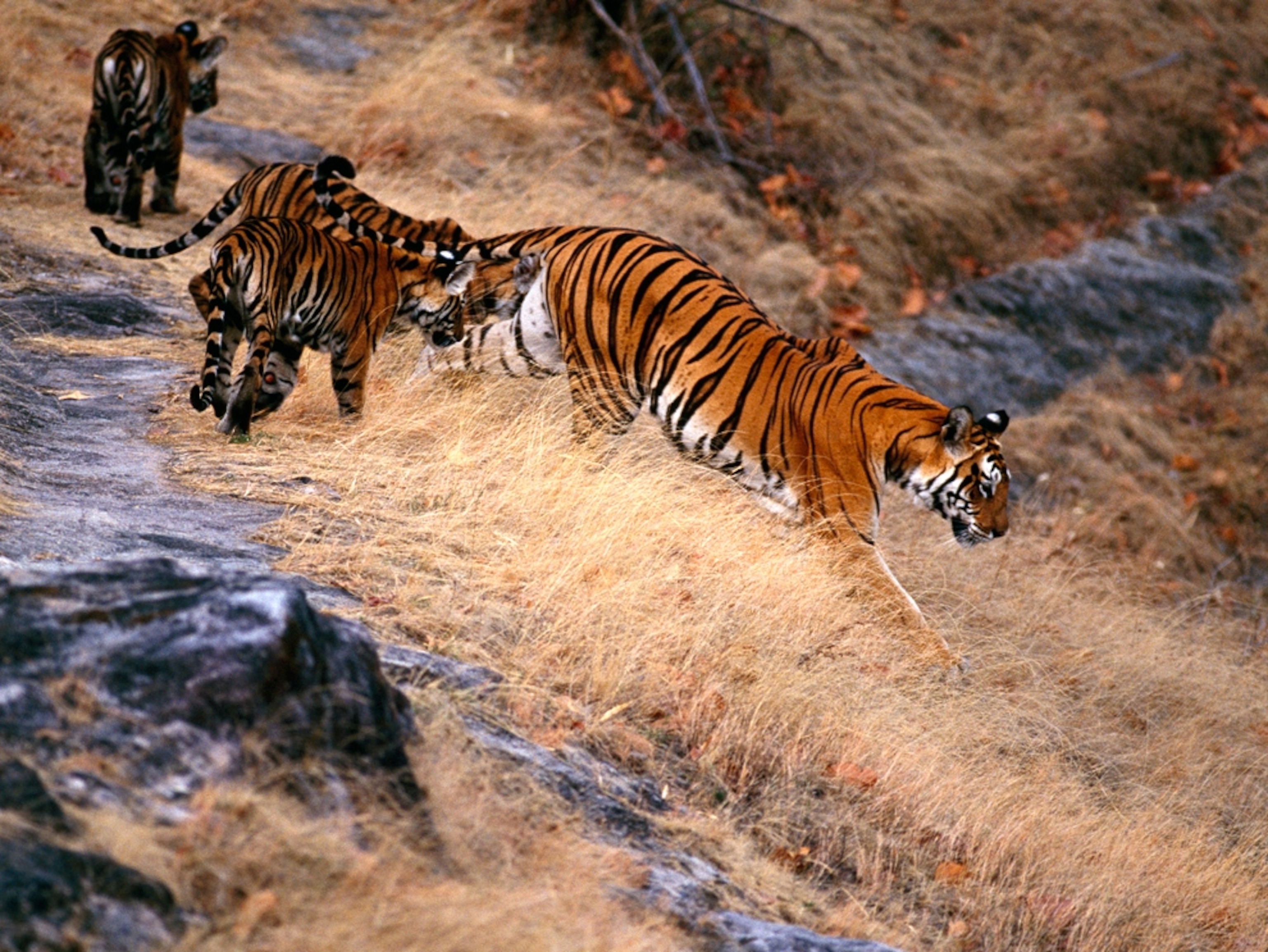
Bengal Tiger and Cubs
Photograph by Michael Nichols
A Bengal tiger takes her cubs to feed on a sambar deer she killed overnight. At three to four months the cubs begin to eat meat but are still too young to hunt, a skill they will learn at 12 to 16 months. -
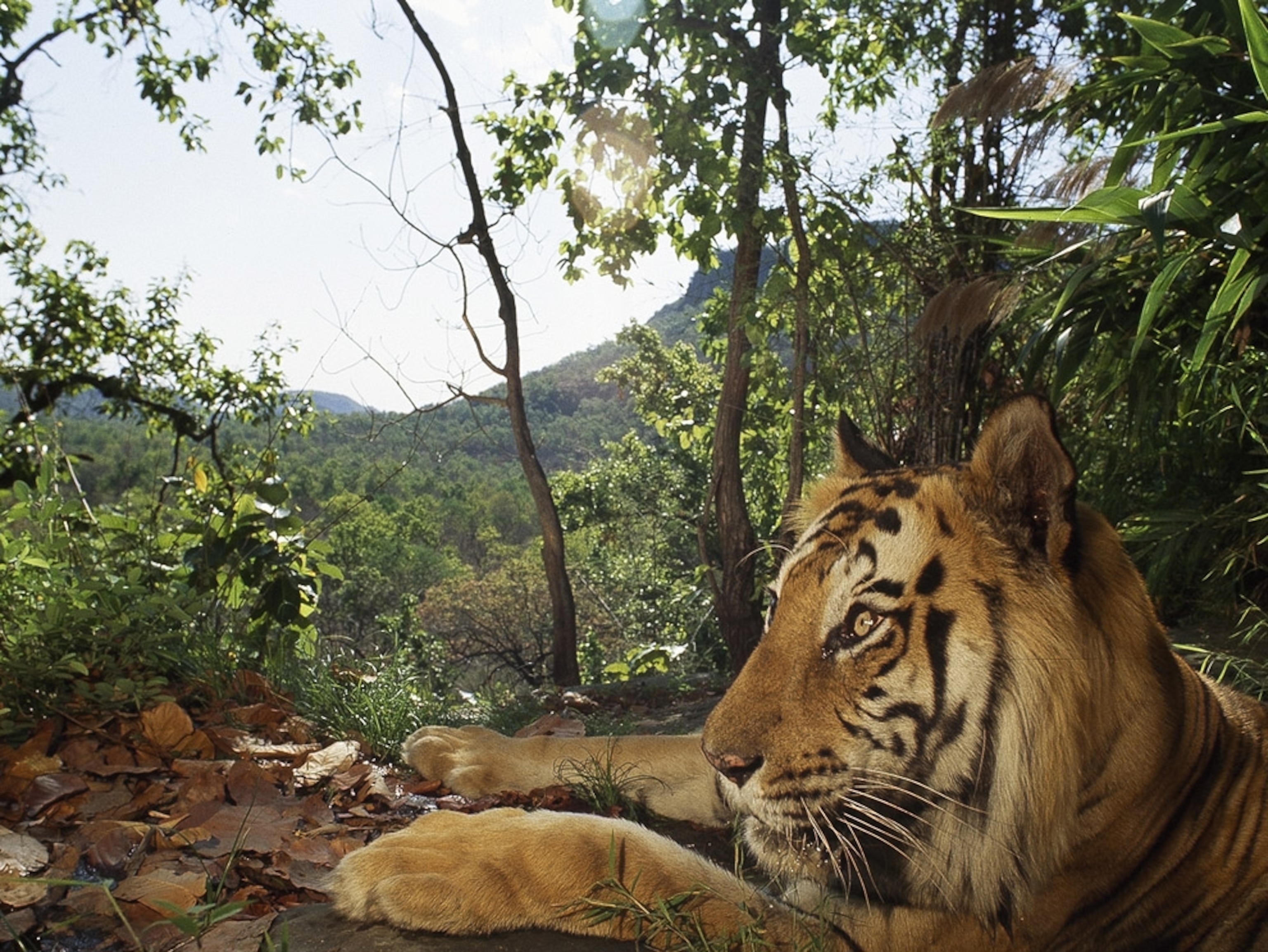
Bengal Tiger in Water
Photograph by Michael Nichols
Triggering a remote camera with her movements, a Bengal tiger takes a self-portrait while cooling off in a pool. -
Snarling Tiger
Photograph by Michael Nichols
In the last century, tiger numbers fell from 100,000 to 3,200 and they now live in only seven percent of their historical range. If tigers are to survive in the wild, they need massive human intervention. -
Bengal Tiger at Night
Photograph by Michael Nichols
Hunting can be dangerous even for such a powerful predator as a tiger. A remotely operated camera captured this tiger that had sustained injuries after feeding on a porcupine.
Learn More About Big Cats
Big Cats Features
-
Lion Numbers Plunge
The king of the African savannah is in serious trouble because of massive conversion of the continent’s remaining wilderness to human land-use, according to a detailed study.
-
Finding the Last Cheetahs of Iran
Intensely shy and hovering on the edge of extinction, Iranian cheetahs are essentially impossible to see.
-
Some Snow Leopards Wild No More?
Thinking of snow leopards as domesticated—and thus dependent on people for food—may help save the dwindling species, one conservationist claims.
-
Cheetah Breaks Speed Record
Beating Usain Bolt's best, Sarah the "polka-dotted missile" clocked the world's fastest recorded time for a 100-meter run.
Help Big Cats
Photos
Tiger Expert
-
Krithi Karanth, Conservation Biologist
Krithi Karanth examines conflicts between humans and wildlife in India.