-
King Cobra
Photograph by Mattias Klum
King cobras avoid humans, but when cornered they can deliver enough venom in their bite to kill 20 people. They can also move forward while looking a 6-foot-tall (1.8-meter-tall) person in the eye, a third of their body raised up off the ground. Found in India, southern China, and Southeast Asia, king cobras are the only snakes in the world to build nests for their eggs.
-
Green Anaconda
Photograph by Claus Meyer/Minden Pictures
Awkward on land but agile in water, the anaconda lives in the swamps and tropical rain forests of South America. This green anaconda is the largest of several varieties; in fact, it is the largest snake in the world by weight, capable of reaching 550 pounds (250 kilograms) and measuring 12 inches (30 centimeters) in diameter. With flexible jaws and muscular bodies, these nonvenomous constrictors squeeze their prey to death and swallow it whole—whether it’s a bird, a wild pig, or a jaguar.
-
Desert Death Adder
Photograph by Jason Edwards
Often colored in rusts and yellows to match its sand and rock surroundings, the desert death adder of western Australia lures prey by wiggling its thin black tail tip. When a lizard approaches, the snake strikes, delivering powerful venom. Australia is home to 17 of the world's most venomous snakes, including the death adder. Even so, snakes only cause one or two deaths a year there.
-
Snake Emerging From Egg
Photograph by Mike Guzman
A green tree python, native to the rain forests of New Guinea and northeastern Australia, emerges from its shell. Most newborn snakes, which must free themselves from tough, leathery eggs, come armed with a single egg tooth, located on their head or snout. The egg tooth is used to tear through the shell and is discarded when the snake first sheds its skin. Thirty percent of snakes, however, give birth to live young. Egg-laying snakes usually live in warmer climates, which helps incubate their eggs.
-
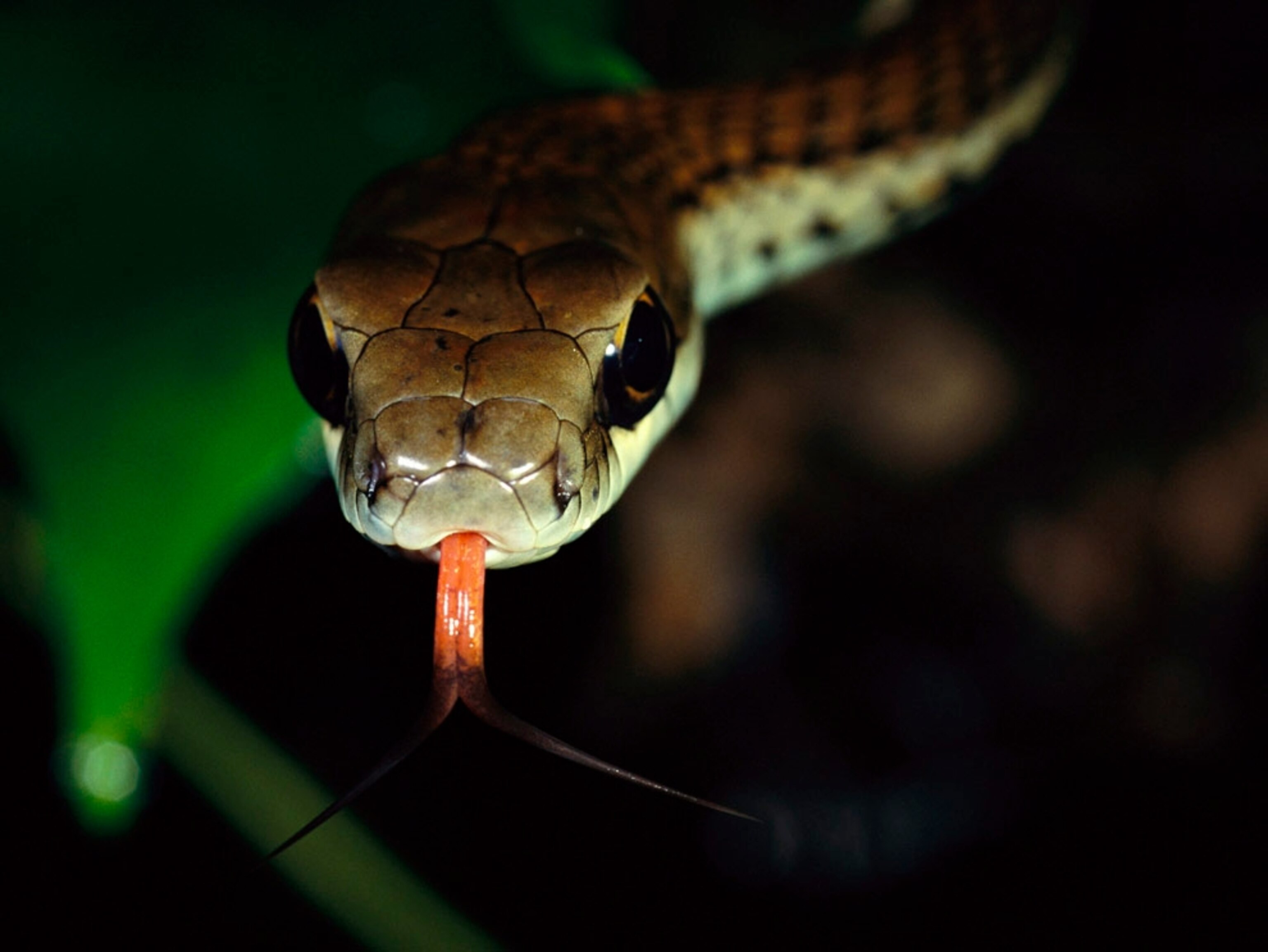
Snake Tongue
Photograph by Tim Laman
While some snakes spend the winter gathered in dens, they disperse widely the rest of the year, making it difficult to find food or mates. To survive, snakes have evolved the forked tongue. They use it to collect scent molecules, which they process within special organs, to discern whether they are nearing a food item or a deadly foe. Male snakes can also judge whether a female snake is of the same species, how ready she is to mate, and—from the intensity of the scents on each fork—in which direction she is moving.
-
Black Mamba
Photograph by Beverly Joubert
Named for the color of the inside of its mouth, the black mamba strikes repeatedly with venomous fangs. Widely considered the world’s deadliest snake, it continues to take human life in its native habitats in southern and eastern Africa, despite the development of antivenin. A resident of rocky hills and grasslands, the black mamba is also among the fastest snakes in the world, moving at up to 12.5 miles (20 kilometers) per hour.
-
Cobra's Hood
Photograph by Jason Edwards
The spectacled cobra, named for the eyeglass design on its flared hood (seen here), shares with the Russell's viper the infamy of causing more human deaths than any other snakes. Both are highly venomous and are found in the midst of vast populations of people in Southeast Asia. The spectacled cobra eats rats, poultry, and frogs and is known to enter houses when hunting.
-
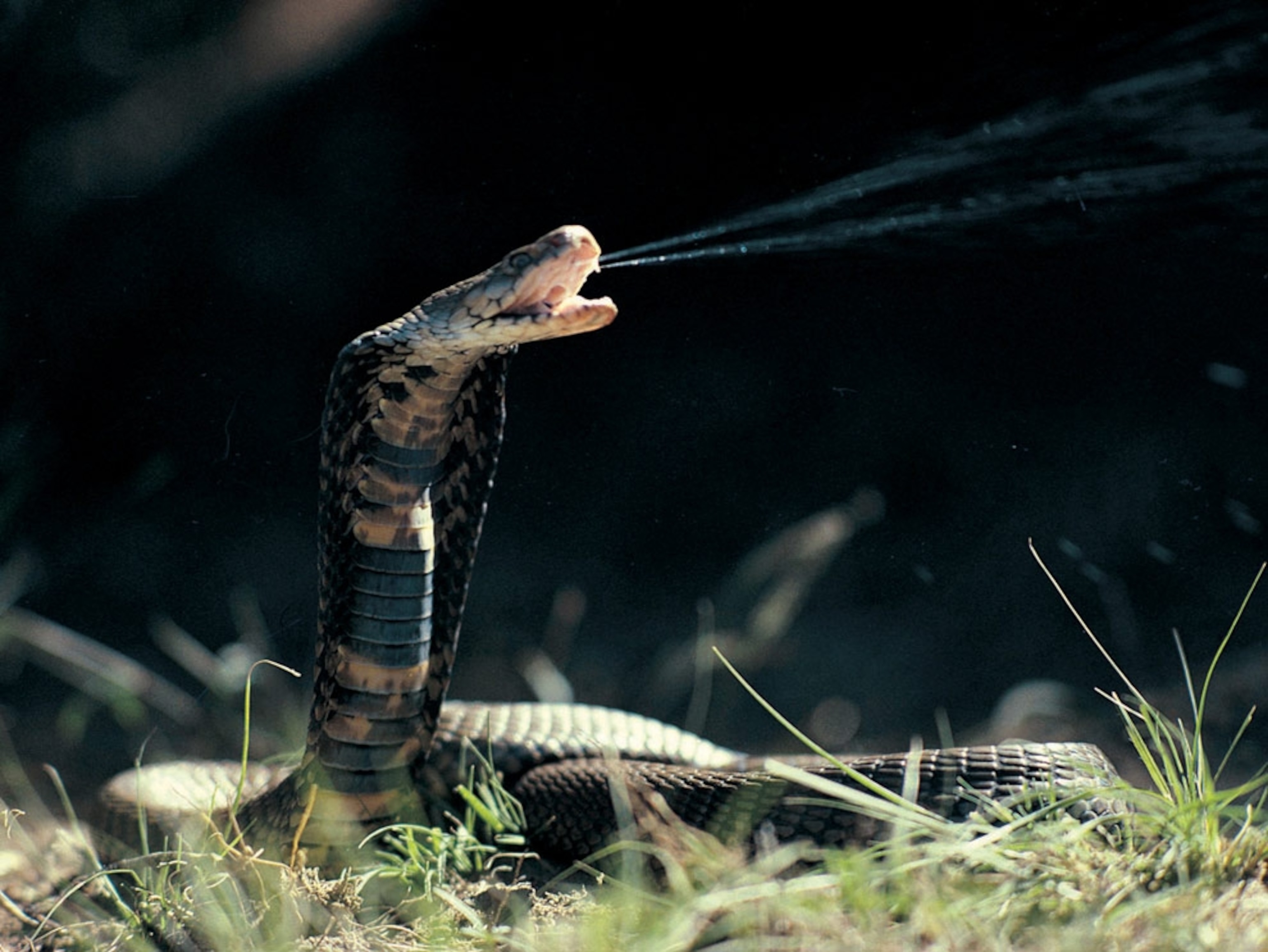
Mozambique Spitting Cobra
Photograph from Stockbyte/Getty Images
The Mozambique spitting cobra can eject venom up to 8 feet (2.4 meters) away. It spits from any position, raised or on the ground, and often goes for the eyes. Untreated, its venom can cause blindness. Considered the most dangerous snake after the mamba, the spitting cobra sometimes feigns death to avoid molestation.
-
Snake Charmers
Photograph by John Scofield
Although still performed in India, other parts of Asia, and North Africa, snake charming as a profession has declined in recent years because of wildlife protection laws and broader public knowledge about the reptiles. Snakes kept by charmers may have their teeth removed, venom ducts burst, and mouths sewn shut. During their "dances," the snakes respond to the shape and movement of a snake charmer’s flute rather than its music; snakes are virtually deaf.
Animals
-
Aardvark
-
Adélie Penguin
-
African Elephant
-
African Lion
-
African Wild Dog
-
Albatross
-
Alligator Snapping Turtle
-
Amazon Horned Frog
-
American Alligator
-
American Bison
-
American Bullfrog
-
American Crocodile
-
Ammonite
-
Andean Condor
-
Anglerfish
-
Ankylosaurus Magniventris
-
Ant
-
Arabian (Dromedary) Camel
-
Arctic Fox
-
Arctic Hare
-
Arctic Skua
-
Armadillo
-
Asian Elephant
-
Asian Lion
-
Atlantic Bluefin Tuna
-
Atlantic Puffin
-
Aye-Aye
-
Baboon
-
Bactrian Camel
-
Bald Eagle
-
Baltimore Oriole
-
Beaver
-
Beluga Whale
-
Bengal Tiger
-
Bird of Paradise
-
Black Bear
-
Black-Footed Ferret
-
Black Mamba
-
Black Rhinoceros
-
Blacktip Shark
-
Black Widow Spider
-
Bluebird
-
Blue Crab
-
Blue-Footed Booby
-
Blue Jay
-
Blue Marlin
-
Blue Whale
-
Boa Constrictor
-
Bobcat
-
Bottlenose Dolphin
-
Box Jellyfish
-
Brachychampsa Montana
-
Brown Bear
-
Bull Shark
-
Burmese Python
-
Butterflyfish
-
California Condor
-
California Sea Lion
-
Canada Goose
-
Cane Toad
-
Canvasback
-
Caribou
-
Carolina Wren
-
Cheetah
-
Chimpanzee
-
Chipmunk
-
Cicada
-
Clouded Leopard
-
Clown Anemonefish
-
Coelacanth
-
Common Earthworm
-
Common Loon
-
Common Octopus
-
Common Sandpiper
-
Common Vampire Bat
-
Common Wombat
-
Coral
-
Cottontail Rabbit
-
Coyote
-
Cretoxyrhina Mantelli
-
Cuban Screech Owl
-
Cubera Snapper
-
Deer Tick
-
Devil Frog
-
Dingo
-
Dog Snapper
-
Dolichorhynchops Osborni
-
Domestic Cat
-
Domestic Dog
-
Draco Lizard
-
Dugong
-
Eastern Coral Snake
-
Eastern Diamondback Rattlesnake
-
Eastern Gray Kangaroo
-
Egyptian Giant Solpugid (Camel Spider)
-
Electric Eel
-
Elephant Seal
-
Elk
-
Emperor Penguin
-
Fennec Fox
-
Firefly (Lightning Bug)
-
Flying Fish
-
Flying Snake
-
Fossa
-
Frilled Lizard
-
Fur Seal
-
Galápagos Tortoise
-
Gelada
-
Gentoo Penguin
-
Geographic Cone Snail
-
Giant Anteater
-
Giant Clam
-
Giant Pacific Octopus
-
Giant Panda
-
Giant River Otter
-
Giant Squid
-
Gibbon
-
Gila Monster
-
Giraffe
-
Golden Cowrie
-
Golden Eagle
-
Golden Jellyfish
-
Golden Lion Tamarin
-
Golden Poison Dart Frog
-
Gray Whale
-
Great Blue Heron
-
Great Egret
-
Greater Flamingo
-
Greater Rhea
-
Great Horned Owl
-
Great White Shark
-
Green Anaconda
-
Green Basilisk Lizard
-
Green-Eyed Tree Frog
-
Green Iguana
-
Green Sea Turtle
-
Grizzly Bear
-
Groundhog
-
Hammerhead Shark
-
Harbor Porpoise
-
Harp Seal
-
Hawaiian Monk Seal
-
Hawksbill Sea Turtle
-
Hedgehog
-
Henodus Chelyops
-
Hesperornis Regalis
-
Hippopotamus
-
Honeybee
-
Horned Toad (Short-Horned Lizard)
-
Hornet
-
Horse
-
Howler Monkey
-
Humpback Whale
-
Impala
-
Indian Rhinoceros
-
Ivory-Billed Woodpecker
-
Jackrabbit
-
Jaguar
-
Kemp's Ridley Sea Turtle
-
Killer Whale (Orca)
-
King Cobra
-
King Vulture
-
Kinkajou
-
Koala
-
Komodo Dragon
-
Krill
-
Ladybug
-
Laughing Kookaburra
-
Leafy and Weedy Sea Dragon
-
Leatherback Sea Turtle
-
Leopard
-
Leopard Seal
-
Leptoceratops Gracilis
-
Lesothosaurus Diagnosticus
-
Lionfish
-
Little Red Flying-Fox
-
Llama
-
Lobster
-
Locust
-
Loggerhead Sea Turtle
-
Lynx
-
Macaw
-
Madagascar Hissing Cockroach
-
Mallard Duck
-
Manatee
-
Mandrill
-
Marine Iguana
-
Matschie's Tree Kangaroo
-
Meerkat
-
Meller's Chameleon
-
Mexican Axolotl
-
Mola (Sunfish)
-
Mole Rat
-
Monarch Butterfly
-
Mongoose
-
Mononykus Olecranus
-
Moose
-
Mosquito
-
Mountain Goat
-
Mountain Gorilla
-
Mountain Lion
-
Mouse Lemur
-
Mudpuppy
-
Musk-Ox
-
Narwhal
-
Nile Crocodile
-
North American River Otter
-
Northern Leopard Frog
-
Nudibranch
-
Nurse Shark
-
Nutria
-
Ocelot
-
Olive Ridley Sea Turtle
-
Opossum
-
Orangutan
-
Oriental Fire-Bellied Toad
-
Osprey
-
Ostrich
-
Oyster
-
Ozark Big-Eared Bat
-
Pachycephalosaurus Wyomingensis
-
Parrot
-
Parrot Fish
-
Peacock
-
Pelican
-
Peregrine Falcon
-
Pileated Woodpecker
-
Platecarpus
-
Platypus
-
Poison Dart Frog
-
Polar Bear
-
Porcupine
-
Portuguese Man-of-War
-
Prairie Dog
-
Praying Mantis
-
Proboscis Monkey
-
Pronghorn
-
Protosphyraena
-
Protostega Gigas
-
Przewalski's Horse
-
Pufferfish
-
Queen Angelfish
-
Quetzal
-
Raccoon
-
Rainbow Trout
-
Raven
-
Red Crab
-
Red-Eyed Tree Frog
-
Red-Footed Booby
-
Red Fox
-
Red Kangaroo
-
Red Leaf Monkey
-
Red Panda
-
Red-Tailed Hawk
-
Red Uakari
-
Rhesus Monkey
-
Right Whale
-
Ringed Seal
-
Ring-Necked Pheasant
-
Ring-Tailed Lemur
-
Rockhopper Penguin
-
Rocky Mountain Bighorn Sheep
-
Ruby-Throated Hummingbird
-
Sailfish
-
Saltwater Crocodile
-
Sandhill Crane
-
Sand Tiger Shark
-
Scarab
-
Scorpion
-
Sea Anemone
-
Sea Cucumber
-
Seahorse
-
Sea Otter
-
Siberian Tiger
-
Sifaka
-
Skunk
-
Sloth Bear
-
Snow Goose
-
Snow Leopard
-
Snowshoe Hare
-
Snowy Owl
-
Sockeye Salmon
-
Spectacled Bear
-
Sperm Whale
-
Spider Monkey
-
Spotted Hyena
-
Spotted Salamander
-
Spring Peeper
-
Squirrel
-
Starfish (Sea Star)
-
Steller Sea Lion
-
Steller's Sea Eagle
-
Stick Insect
-
Stingray
-
Styxosaurus Snowii
-
Sumatran Rhinoceros
-
Sun Bear
-
Tapir
-
Tarantula
-
Tasmanian Devil
-
Thescelosaurus Neglectus
-
Thick-Billed Murre
-
Thomson's Gazelle
-
Three-Toed Sloth
-
Tiger Salamander
-
Tiger Shark
-
Toucan
-
Triceratops Horridus
-
Triggerfish
-
Troodon Formosus
-
Tundra Swan
-
Tusotheuthis Longa
-
Two-Toed Sloth
-
Tylosaurus Proriger
-
Tyrannosaurus Rex
-
Velociraptor Mongoliensis
-
Wallaby
-
Wallace's Flying Frog
-
Walrus
-
Warthog
-
Warty Newt
-
Wasp
-
Water Buffalo
-
Web-Footed Gecko
-
Weddell Seal
-
Western Lowland Gorilla
-
Whale Shark
-
White-Eared Kob
-
White Rhinoceros
-
White-Tailed Deer
-
Whooping Crane
-
Wildebeest
-
Wild Turkey
-
Wolf
-
Wolverine
-
Wood Stork
-
Xiphactinus Audax
-
Zebra
Snake Expert
-
Zoltan Takacs, Herpetologist and Toxinologist
Snake venom could save your life, says Zoltan Takacs.